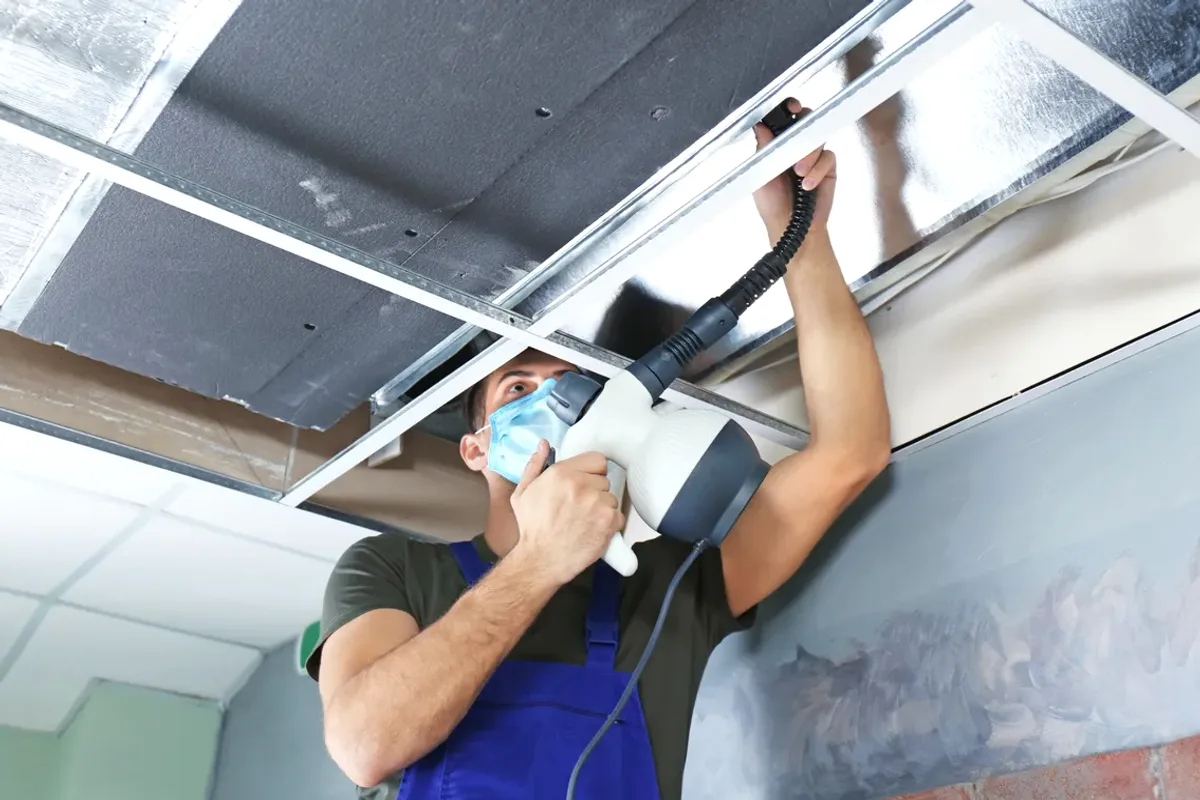
Request duct cleaning for a property in Stratford. Include the equipment, the problem or planned work, and your location so the request can be reviewed.
What findings help determine whether duct cleaning is appropriate?
Duct cleaning is most useful to consider after identifying material or a specific condition in the ductwork, rather than as an automatic routine service. Visible debris at a register, a persistent musty odour, or a restricted passage can justify inspection, but each may have a different cause. Duct length, access, internal condition, and the location of the material affect the work. Cleaning should not be confused with repairing leaks, replacing damaged ducts, or correcting equipment faults.
Describe where dust or debris is visible, whether the concern is limited to one register or appears across the duct system, and when an odour or airflow change occurs. Inspection should establish what material is present, how far it extends, and whether ducts are accessible. These findings determine whether cleaning is relevant or whether a separate duct, moisture, or equipment issue needs assessment.
Inspection and cleaning of accessible ductwork and registers
Dust, debris, odour, and airflow observations
Duct leakage or damage as separate repair work
Assessment and Scope
Questions for the Proposed Work
01
Use inspection findings to define cleaning scope
Dust on a return grille does not establish how much material is inside the ductwork. A closer inspection can determine whether debris is limited to a register or extends into accessible passages and air-handling areas. Pet dander, pollen, and ordinary dust are examples of material that may be observed, not proof of a particular indoor-air outcome. The documented location and extent help decide what cleaning, if any, is relevant.
02
Separate cleaning from airflow and duct repairs
Weak airflow can result from a blocked duct, a leak, a damaged section, an equipment problem, or another restriction; cleaning addresses only suitable accumulated material. If inspection identifies leaking joints or failing ductwork, sealing or replacement is separate work with its own scope. A musty odour also calls for finding its source rather than assuming debris is responsible. Compare the inspection findings with the proposed work before proceeding.
03
Consider access and system layout
The number of registers alone does not show how much ductwork is accessible or how extensive cleaning would be. Duct length, branching, access openings, and the location of the affected material all influence the scope. Central air and heat-pump systems may share ductwork with a furnace, so inspection should identify the actual passages and components involved. Cleaning methods and any maintenance beyond cleaning should follow findings and applicable equipment instructions.
Compare the next step
Ask which sections can be reached, which access openings are proposed, and how those openings will be closed. Describe furniture, finishes, and storage that could affect the work. A complete cleaning scope should identify feasible access and property protection instead of assuming every duct can be reached from a room register.
Routine cleaning is not automatically necessary and does not guarantee health or energy benefits. Resolve moisture sources and assess damaged materials rather than treating cleaning as the only remedy.