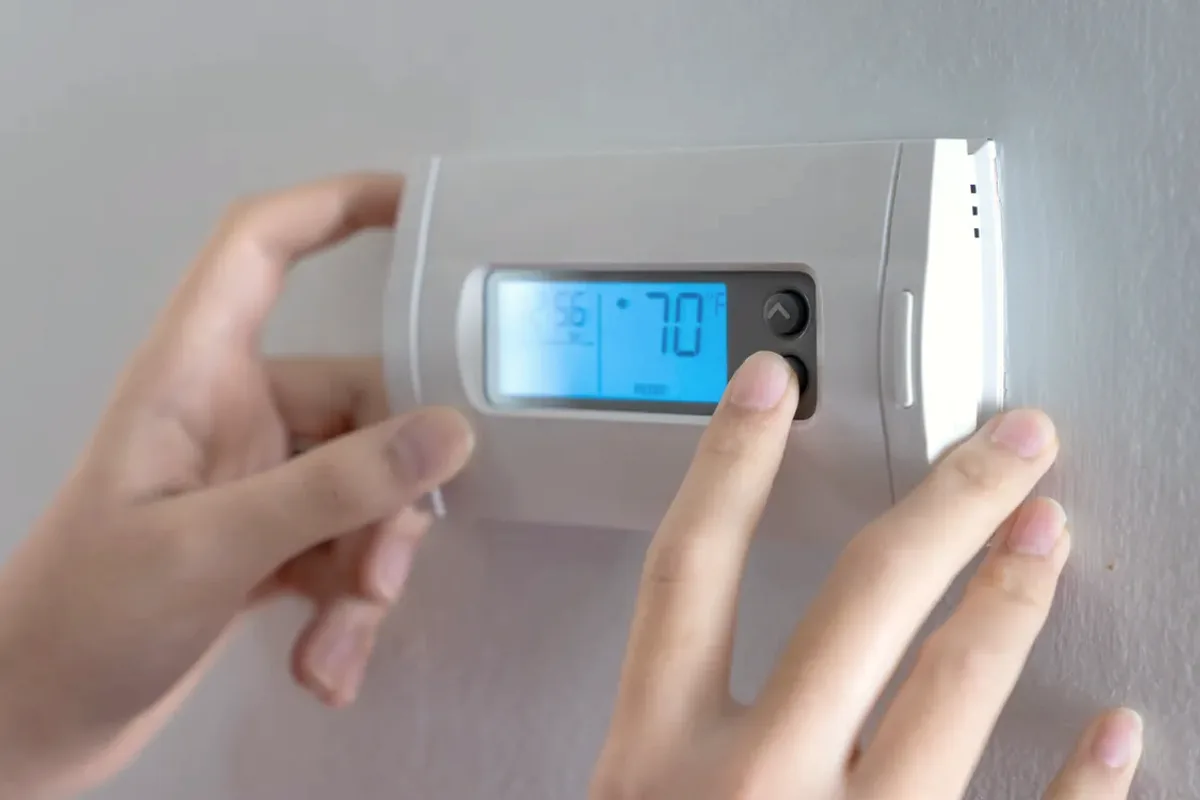
Request thermostat repair & replacement for a property in Stratford. Include the equipment, the problem or planned work, and your location so the request can be reviewed.
What information helps determine whether a thermostat needs repair or replacement?
Thermostat repair starts by comparing the displayed temperature and system response with what is happening in the served space. A blank screen, short cycling, or noticeable temperature swings can arise from different causes, including a control fault, sensor placement, wiring, or equipment compatibility. Thermostats used with furnaces, boilers, and mini-splits may have different control requirements. Repair, relocation, recalibration, or replacement should be considered only after the control and its installation are assessed.
Note the thermostat model, displayed temperature, times when the system starts or stops unexpectedly, and whether the problem affects heating, cooling, or both. Describe nearby windows, direct sun, supply vents, or other placement conditions. If available, include the connected equipment type and control wiring details. These observations help distinguish sensor-location effects from compatibility, wiring, or thermostat faults.
Thermostat faults, blank displays, and short cycling
Sensor placement near windows, sunlight, and supply vents
Control compatibility for furnaces, boilers, and mini-splits
Assessment and Scope
Questions for the Proposed Work
01
Check whether placement explains temperature swings
A thermostat exposed to direct sun, a cold window, or air from a nearby supply vent may sense conditions unlike the rest of the room. Compare its location with the spaces that feel different and note when readings change. Recalibration or relocation is a separate decision from replacing a failed control. Assessment should establish whether placement explains the symptoms before a new thermostat is selected.
02
Match the control to the connected equipment
A thermostat that works with one furnace or boiler configuration may not support the controls of a different system. Mini-split equipment can also require model-specific control compatibility. Before replacement, confirm the equipment model, wiring arrangement, and functions needed, such as scheduling or remote access. Those details matter because a feature-rich control is not useful if it cannot communicate correctly with the connected heating or cooling system.
03
Distinguish repair from a control upgrade
A blank display, inaccurate reading, or short cycling warrants diagnosis of the thermostat and its connection to the equipment; the symptom alone does not prove the control has failed. If the existing unit is compatible and its fault is repairable, repair may be considered. Replacement is a separate choice when the control is unsuitable, damaged, or incompatible with desired functions. Internal wiring and electrical checks are not occupant tasks.
Compare the next step
Explain the user access needs and proposed control position, then ask whether that location represents the controlled space. Compare supported remote sensors or interfaces where direct relocation is unsuitable. Keep the device usable without placing it where sunlight, a heat source, or unusual air movement distorts its purpose. Ask the user to review the proposed interface for readable information and practical operation. Compare local buttons, supported remote functions, and sensor options with the equipment and the actual access need.
Thermostat wiring is not universal. Do not connect wires by colour alone or work on energized wiring; a compatible control must be configured for the equipment it serves.